The course is accredited by the Malta Further and Higher Education Authority (MFHEA).
The programme will consist of one module. The contact hours will be in the form of a day seminar.
The general aim is to apply an interdisciplinary approach to Shakespeare, bringing together literature, philosophy and psychology.
After a general introduction to Shakespeare as an author in a particular socio-cultural context, themes of political philosophy will be analysed in one particular play as a case. Following this, in an interactive style, participants will be helped to integrate these themes in a reading of their own personal life story and their current situation.
The reading/study hours and the assessment will then aim to further enhance the competences, skills, and knowledge.
- 3 Sections
- 1 Lesson
- 1 Day
- Structure of the Programme1
- Mode of DeliveryA highly practical and participative approach with hands-on workshops is adopted. Following a general introduction, one Shakespeare play will be chosen as a case, in order to facilitate learning. This will contribute towards the application of knowledge and skills to one’s personal life and contexts, which is one of the main foci of this award. Moreover, collaborative learning activities during the workshop/s are encouraged to enhance mutual learning and cooperation among the learners through group and peer of best practices.
The above non-formal methods are tailored according to the learners’ needs and professional profiles, to guarantee effectiveness, productivity, and application for life. This is ensured through the participants’ input in the evaluation sheets disseminated at the end of each seminar, every time that the award is opened.
In line with the Salesian approach, it is made sure that participants feel at home and comfortable to discuss, share their opinions and experiences.0 - AssessmentThere will be 2 optional methods of assessment. The participants will choose and apply for the method of assessment at the end of the seminar during which all the necessary explanations are given.
Method 1:
Participation in a play (30%) together with journal entries (40%), and a short written final reflection (c.500 words), incorporating extra readings (30%).
Method 2:
A written assignment (c.2000 words) incorporating the various elements learned during the contact hours, the extra readings, and personal reflection. (100%)
For both methods, the overall pass mark is 50%.
Nb. For method 1, the overall mark will determine pass or fail, even if a participant fails in one of the two parts.
Both parts of method 1, the overall mark of method 1, and the assignment of method 2 are graded according to the following table:
A=85 -100
B=70 – 84
C=51 – 69
D=46 – 50
E=40 – 45
F=(marks under 39) Fail0
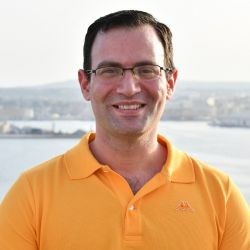
Robert Falzon is a Salesian of Don Bosco. He obtained a Bachelor in Education in 2007 specialising in Biology and Chemistry. He later studied philosophy and theology as part of his preparation for the priesthood. In 2022 he obtained a Master in Christian Spirituality and published his dissertation under the title The Gift of Fiction. Robert edited a multi-author book St. Francis de Sales: The Bee and the Blossoms and contributed an article in the same. He has also edited several other books of educational and spiritual nature by different authors. In two conferences in 2023 he presented the papers "Education as Spirituality" and "J.R.R. Tolkien's Method of Contrasts." His research interests are Tolkien studies, spirituality and inter-spirituality, and the relation between the arts and spirituality.