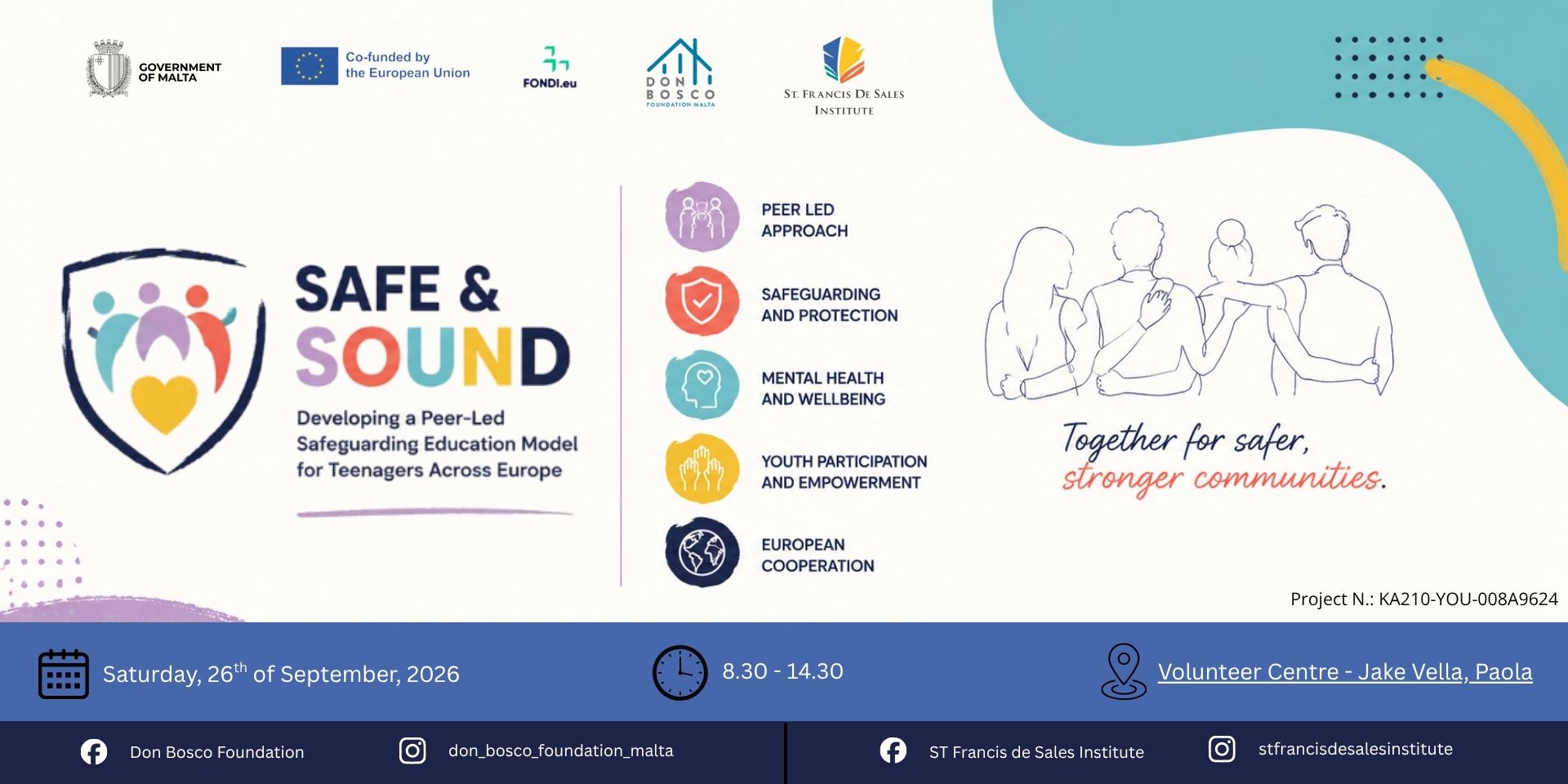
Safe & Sound
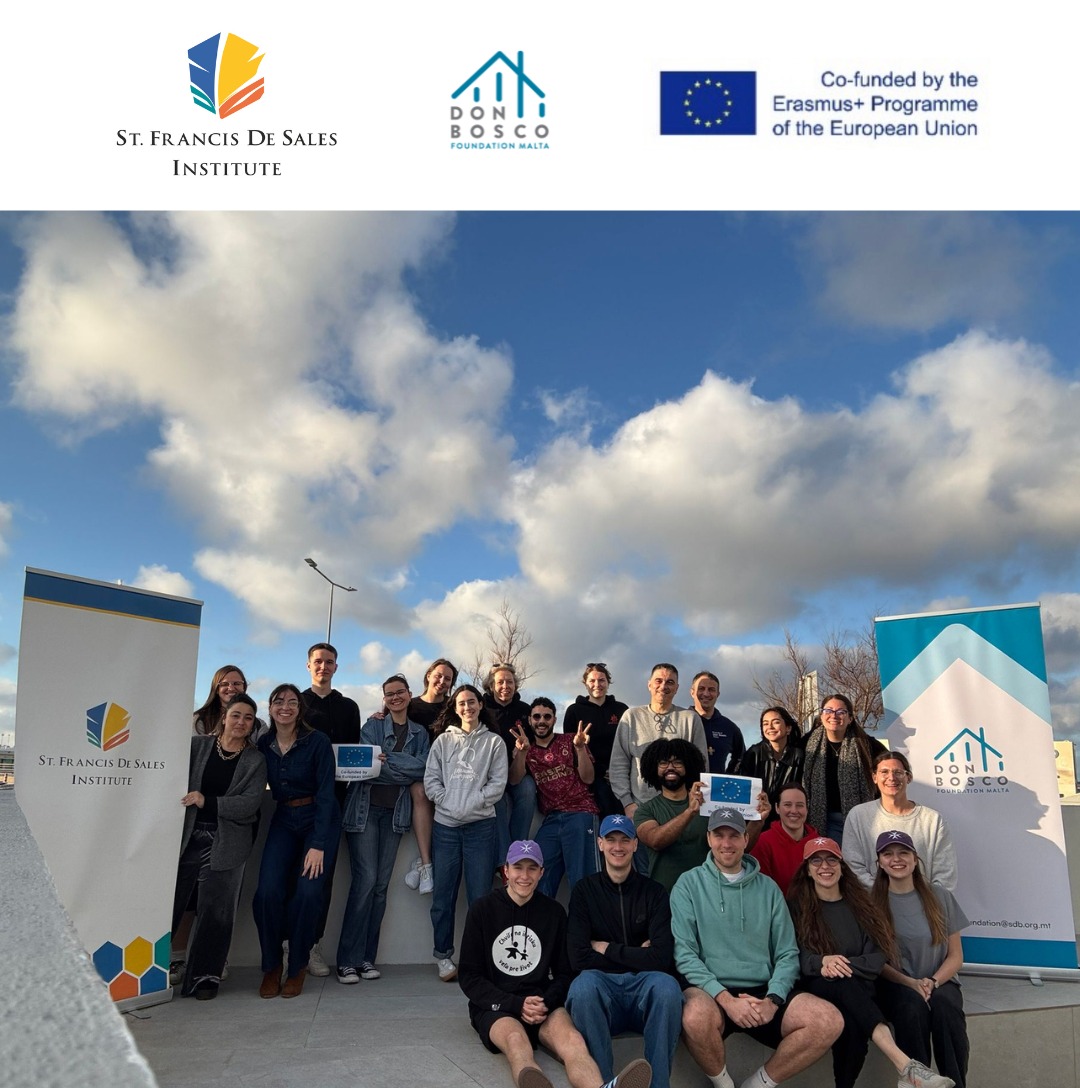
Safe & Sound: Developing a Peer-Led Safeguarding Education Model for Teenagers Across Europe is an Erasmus+ KA2 project coordinated by Don Bosco Foundation Malta and developed in partnership with KROV (Serbia), Stichting Don Bosco (The Netherlands) and Domka (Slovakia). The project responds to the need for stronger, more practical and youth-centred safeguarding approaches in youth settings, recognising that creating safe environments requires not only well-prepared professionals, but also young people who understand their rights, can recognise risks and feel confident to speak up and support one another.
The project aims to develop a peer-led safeguarding education model for teenagers, while strengthening the knowledge, skills and confidence of youth workers and educators who accompany them. It brings together safeguarding and child protection, mental health and wellbeing, youth participation and empowerment, and peer-led learning to help create environments where young people feel safe, heard and actively involved in their own protection.
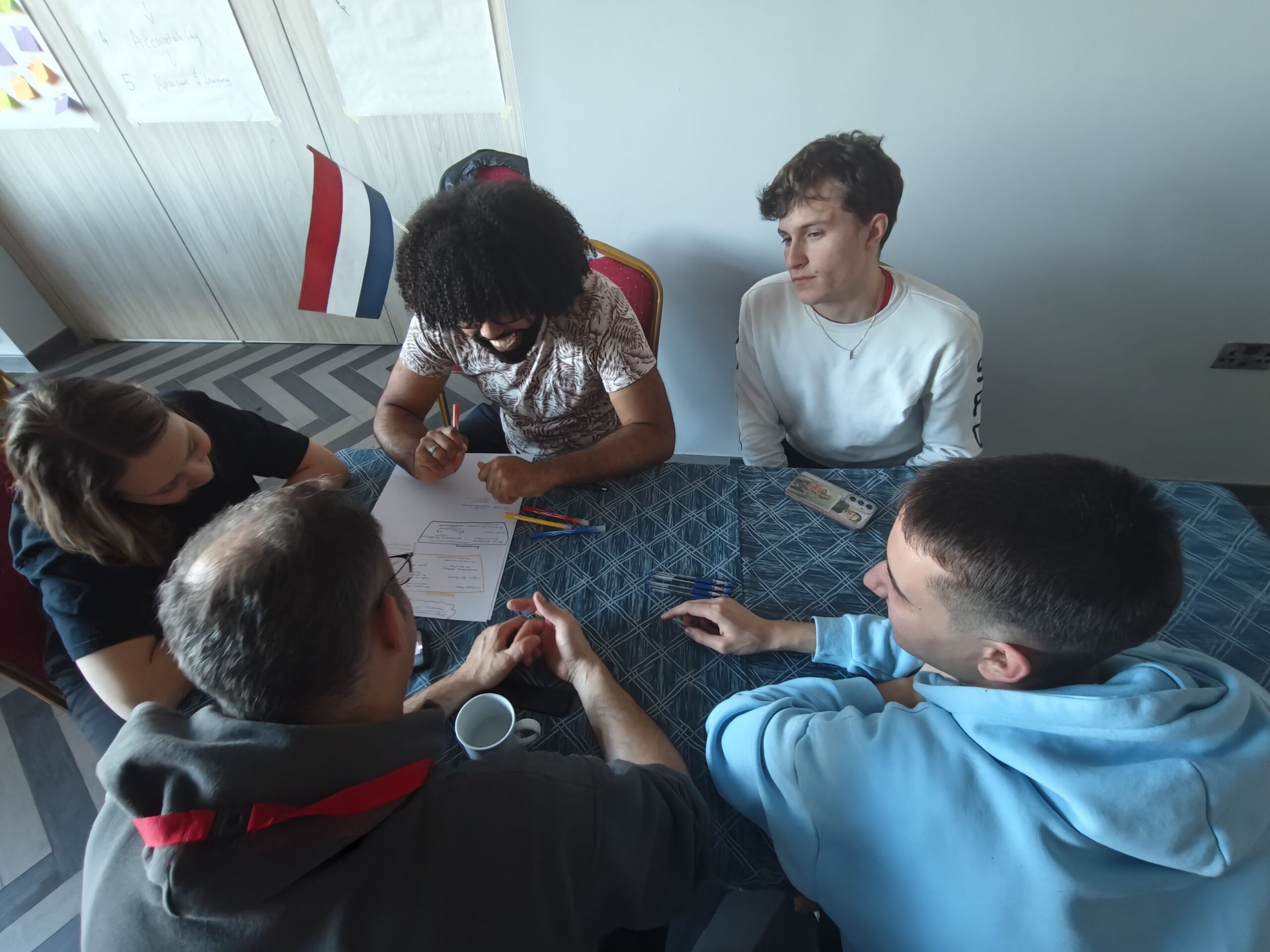
Through research, international training, practical activities and youth-led initiatives, Safe & Sound turns these needs into practical tools and learning experiences that can be adapted to different youth work contexts across Europe. Ultimately, the project seeks to strengthen safeguarding practices while empowering young people to become active participants in building safer, more inclusive and supportive communities.
Project Partners
- Don Bosco Foundation Malta (Coordinator)
- KROV, Serbia
- Stichting Don Bosco, The Netherlands
- Domka, Slovakia
Erasmus+ Programme
Safe & Sound is funded through the Erasmus+ Programme under Key Action 2 (KA2), which supports cooperation partnerships that promote innovation, exchange of good practice and capacity building across Europe.
Events & Seminars
Safe & Sound Seminar
News
Get Involved
EU Funding Disclaimer
Funded by the European Union. Views and opinions expressed are however those of the author(s) only and do not necessarily reflect those of the European Union or European Union Programme Agency (EUPA). Neither the European Union nor the granting authority can be held responsible for them.